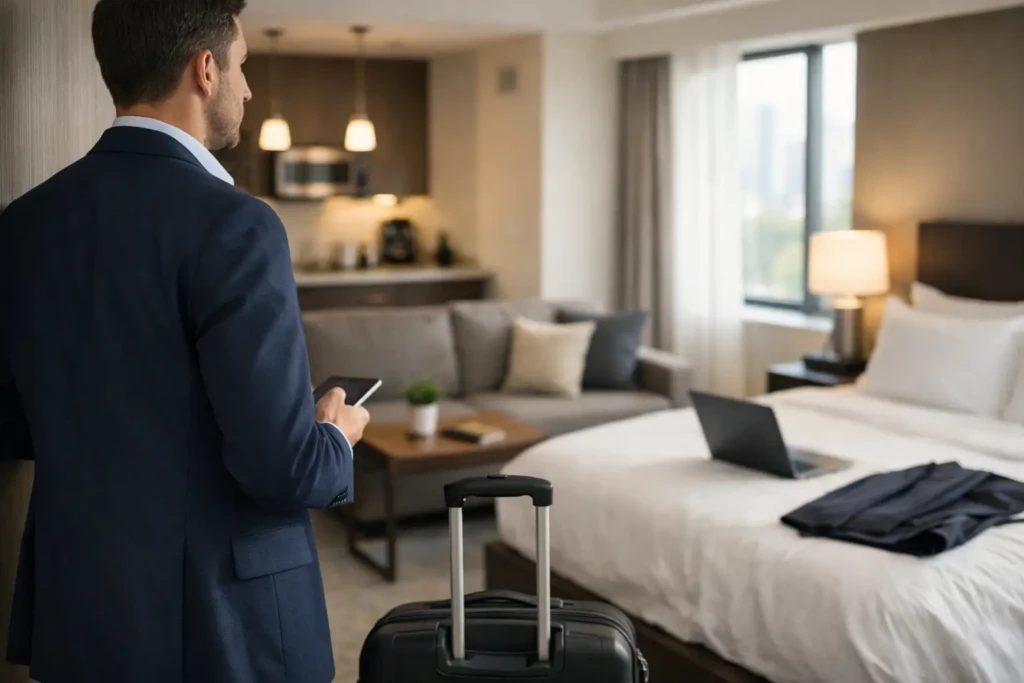
A missed call before rounds. A laptop balanced on a kitchen stool. A “fully furnished” rental that turns out to mean one dull knife, weak Wi-Fi, and nowhere quiet to work. Business travel housing can look right in photos and still make your stay harder than it needs to be. That is why knowing how to choose business stay housing matters before you book, not after you check in.
If you are traveling for a project, a contract assignment, a relocation, or an extended training schedule, the goal is not simply to find a place to sleep. You need a property that supports your routine, protects your time, and feels dependable from day one. The best business stay housing blends the efficiency of a hotel with the comfort and space of a home.
How to choose business stay housing for real workdays
Start with the question most travelers ask too late: what will your day actually look like in the space? If you leave early, take calls at night, cook most meals, or need room for a spouse, child, or teammate, those details should shape your decision more than design style.
A one-bedroom apartment near your worksite may sound efficient, but if the layout is noisy, the seating is uncomfortable, and there is no dedicated workspace, the savings disappear quickly. On the other hand, a larger furnished home can be the smarter choice for longer stays because it gives you separation between work and rest, more privacy, and a setup that feels sustainable after the first week.
For travel nurses and professionals on 30-, 60-, or 90-day assignments, comfort is not a luxury. It affects sleep, focus, and how easy it is to stay consistent. For corporate teams or relocating families, square footage matters even more. Shared housing only works when there is enough room to spread out without stepping on each other’s schedules.
Location should reduce friction, not just look convenient
Distance on a map is one thing. Commute reality is another. A property may appear close to a hospital, office, conference site, or client location, but the practical question is how much stress that route adds to your day.
When evaluating location, think beyond mileage. Consider traffic patterns, parking, and whether you will need access to major roads for multiple destinations. If your stay includes work obligations across Central Florida, a home base in a well-connected area can save more time than a property that is technically closest to only one stop.
You should also look at what surrounds the property. Nearby grocery options, pharmacies, coffee shops, gyms, and basic services matter more on an extended stay than they do on a two-night trip. If you are relocating with family, access to quiet neighborhoods, recreation, and everyday convenience can make the transition noticeably smoother.
The essentials are not extras
Many listings advertise the same features, but business travelers know that not all amenities are equal. High-speed Wi-Fi is not the same as reliable Wi-Fi. A desk in a bedroom corner is not the same as a true workspace. A furnished kitchen is only useful if it is equipped well enough to support actual meals.
This is where it pays to read with a practical eye. Ask whether the home supports your routine, not just your arrival. Can you comfortably take a video call? Is there enough seating to work in one area and unwind in another? If two people are staying, can both function without competing for the same table, outlet, or quiet zone?
Laundry is another overlooked factor. For business travelers on multiweek assignments, in-home laundry is not a perk. It is part of a functional stay. The same goes for comfortable beds, blackout window treatments, climate control, and enough bathrooms for the number of guests. A property that looks polished but creates daily inconvenience will wear thin fast.
Flexibility matters more than most travelers expect
If your work is tied to shifting timelines, housing flexibility should be part of your decision from the start. Project durations change. Contracts extend. Closing dates move. Team arrivals get staggered. The best business stay housing gives you room to adapt without turning every change into a pricing or logistics problem.
This is especially important for corporate travel managers, travel nurses, and families between homes. You may need a stay that begins as a few weeks and becomes a few months. You may need direct communication around extensions, invoices, or custom arrangements. A rigid setup can create stress right when you need stability.
Before booking, understand the stay terms clearly. Ask about minimums, extension options, cancellation guidance, payment structure, and whether custom quotes are available for longer stays or team housing. A professional operator will be direct about what is possible and help you plan around realistic scenarios.
Service is the difference between decent and dependable
One of the biggest mistakes travelers make when deciding how to choose business stay housing is focusing only on the property itself. The service behind the property matters just as much.
A well-managed home can solve problems before they disrupt your schedule. A poorly managed one can leave you waiting on answers when you need them most. That matters if you arrive late, need move-in clarity, have a maintenance issue, or simply want confidence that someone will respond quickly.
Look for signs of professional hospitality rather than casual hosting. Clear pre-arrival communication, consistent standards, responsive support, and straightforward booking terms are all good indicators. For longer stays, concierge-style assistance can add real value, especially when transportation coordination, local guidance, or special requests are involved.
這裡 高級企業住房 stands apart from many peer-to-peer rentals. You are not just reserving square footage. You are choosing whether your stay will feel supported. Florida HomeShares, for example, is built around that idea with fully furnished homes, productivity-focused amenities, and a VIP-style service model designed for working guests who need more than a basic rental.
Space should match the length and purpose of your stay
Short business trips and extended assignments call for different housing decisions. For a few nights, a compact layout may be enough. For several weeks or months, the property needs to hold up under real life.
That usually means separate zones for sleeping, working, dining, and relaxing. It also means enough room for luggage, groceries, personal items, and the routines that build up over time. If you are housing a team or relocating with family, multiple bedrooms and bathrooms are not simply convenient. They preserve privacy and make the stay more comfortable for everyone.
The trade-off is that larger homes can cost more upfront. But for group stays, they often provide better value per person than multiple hotel rooms. They also reduce the hidden costs of eating every meal out, paying for laundry, or trying to work from spaces that were never designed for productivity.
Reviews and photos tell part of the story
Photos matter, but they are the opening pitch, not the full answer. Look closely at whether the property appears set up for business living or simply staged well. Wide living areas, real dining space, usable desks, and clean, consistent presentation often say more than trendy decor.
Reviews can help, but read them with your own priorities in mind. A glowing vacation review may not tell you much about Wi-Fi stability, workspace comfort, or how management handles a month-long stay. What you want to see are signs of reliability, cleanliness, responsive communication, and accuracy between listing and reality.
If anything feels vague, ask. A strong provider should be comfortable answering practical questions about internet speed, parking, kitchen equipment, sleeping arrangements, and neighborhood feel. Clear answers usually signal clear operations.
Book with the stay after check-in in mind
The right property should make arrival simple and the days after that easier. That means clear instructions, straightforward billing if needed for reimbursement, and enough consistency that you can settle in quickly. Every extra hour spent chasing details is an hour taken from work, rest, or family.
When comparing options, think about the first 72 hours of the stay. Will you be able to unload, connect, cook, work, and sleep without immediate friction? If the answer is yes, you are likely looking at housing that was designed with real guests in mind rather than just occupancy.
Business travel already asks enough of your schedule. The housing you choose should give something back – quiet where you need it, flexibility when plans shift, and service that helps you feel taken care of instead of left to sort things out yourself. The best stay is not the one with the flashiest listing. It is the one that lets you focus on why you came.