
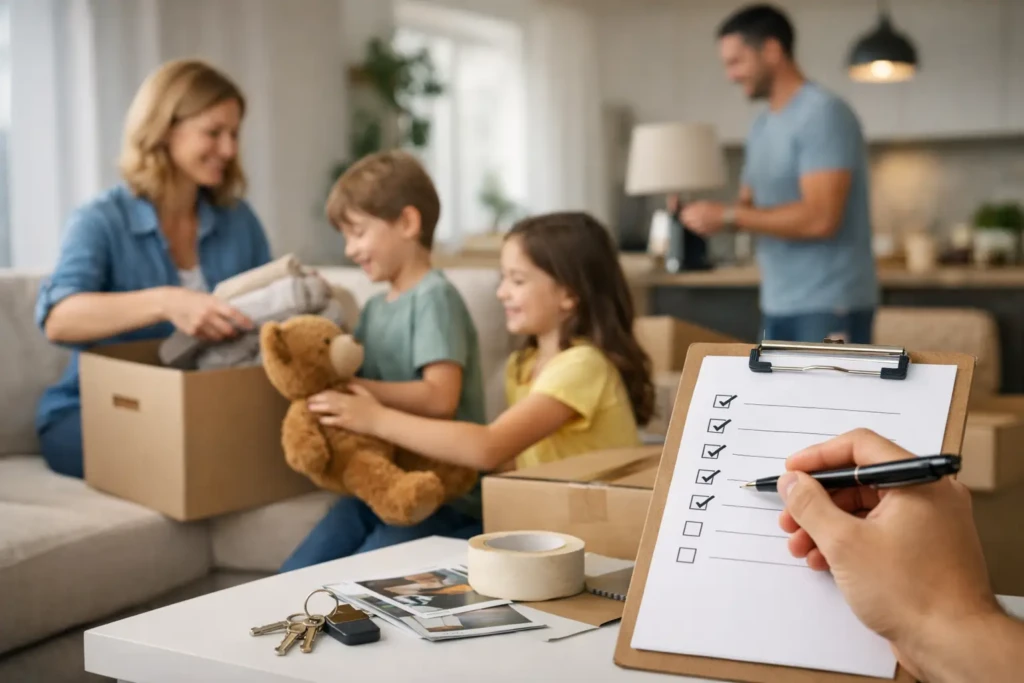
The first night in a furnished rental tells you almost everything. If the Wi-Fi is spotty, the kids cannot find their pajamas, or the kitchen is missing basics, a temporary stay starts to feel harder than it should. A solid furnished rental move in checklist for families helps you catch those details early, settle in faster, and turn a short-term home into a workable routine.
For families relocating, waiting on a home closing, traveling for medical work, or managing a temporary assignment, move-in day is not just about unpacking. It is about making sure the home supports real life right away – school mornings, work calls, bedtime, meals, laundry, and the hundred small things that keep a household running. The right checklist protects your time and lowers stress.
Why a furnished rental move in checklist for families matters
A furnished home removes the biggest setup burdens, but furnished does not always mean identical from one property to the next. One home may have a fully stocked kitchen and blackout curtains in every bedroom. Another may have great living space but fewer child-friendly storage options. That does not mean anything is wrong. It means families do better when they verify what is there, what works, and what needs quick support.
This is especially true for mid-term and transitional stays. If you are only in a property for a week, you can tolerate a few inconveniences. If you are staying for a month or three, those same inconveniences become daily friction. A move-in checklist helps you identify what matters for your specific routine before the first busy weekday begins.
Start with the practical basics before you unpack
Before suitcases are emptied and snacks are distributed, pause for a quick walkthrough. This is the moment to confirm access, cleanliness, safety, and functionality while the home is still easy to assess.
Check that entry instructions work smoothly, including smart locks, gate codes, parking details, and any building access points. If grandparents, a spouse, or a caregiver will arrive later, confirm how they will get in too. Families often overlook this until someone is standing outside with groceries and no code.
Then look at the condition of the home. You are not performing a white-glove inspection, but you do want to note anything that affects comfort or use. Scan bathrooms, kitchen surfaces, bedding, floors, and major furniture. If something is damaged or missing, reporting it right away is better for everyone. Premium furnished housing should feel guest-ready from the start.
Confirm the home supports your family routine
A family-friendly rental is not just about enough beds. It is about whether the space works at 7:00 a.m., 3:30 p.m., and 9:00 p.m. when everyone needs something at once.
Start with sleeping arrangements. Verify which bedroom each family member will use, whether extra linens are available, and if room-darkening shades or a sound machine are needed for younger children. Families with babies or toddlers may also want to decide early where a portable crib can safely fit without blocking walkways.
Next, test the bathrooms in real terms. Are there enough towels for your household size? Is there counter space for toiletries? Do the showers drain well? In a 3-bedroom, 4-bath home, that extra bathroom capacity can be a major relief during school and work mornings, but only if everyone knows which spaces are assigned and stocked.
Storage matters more than most families expect. Even in a beautifully furnished home, open suitcases everywhere can make the stay feel chaotic. Look for closet space, dresser drawers, pantry room, and a drop zone for shoes, backpacks, and keys. If storage is limited, choose one area to serve as your family command center from day one.
Kitchen, laundry, and Wi-Fi are the real make-or-break items
Families can work around decorative preferences. They cannot easily work around a kitchen that does not support regular meals, laundry that falls behind, or internet that fails during remote work and school tasks.
In the kitchen, confirm the essentials you will use most often: plates, cups, utensils, kid-friendly bowls, cookware, food storage containers, and a coffee maker if that is part of your morning survival plan. Check the refrigerator temperature, freezer space, dishwasher status, and whether there is enough room for a real grocery run. If your family has dietary needs, this is also the time to assess prep space and appliance reliability.
Laundry comes next. Find the washer and dryer, read any posted instructions, and check whether detergent is supplied or if you need to purchase your own. For families, especially those staying multiple weeks, in-home laundry is not a nice extra. It is one of the features that makes temporary housing actually livable.
Then test the Wi-Fi immediately. Do not assume that because the network name is posted, the service is strong in every room. Check the signal in bedrooms, living areas, and any dedicated workspace. If one adult is taking meetings while another handles school communications or streaming for the kids, weak internet creates tension fast. Reliable high-speed Wi-Fi is one of the clearest signs that a furnished rental is set up for working households, not just casual vacation use.
Safety checks every family should do on day one
Even in a professionally managed home, every family has its own comfort level and safety priorities. A quick review helps you settle in with more confidence.
Locate smoke detectors, fire extinguishers, first-aid supplies, and emergency exits. Make sure you know how to lock all exterior doors and check whether any pool, patio, or outdoor recreation areas need closer supervision for children. If the property has stairs, balconies, or themed game rooms, set house rules early rather than after the first close call.
This is also a good time to review neighborhood logistics. Where is the nearest urgent care, pharmacy, grocery store, and gas station? Families staying in Central Florida for relocation, healthcare work, or temporary housing often underestimate how helpful this local orientation is in the first 48 hours.
Use a simple furnished rental move in checklist for families
The best checklist is short enough to use and thorough enough to prevent avoidable problems. On move-in day, focus on these priorities:
- Access works: entry code, keys, parking, gates, and guest arrivals
- Home condition: clean surfaces, fresh linens, working lights, visible damage noted
- Bedrooms ready: bedding, sleep setup, storage, and nighttime comfort
- Bathrooms stocked: towels, hot water, drainage, and toiletries space
- Kitchen functional: dishes, cookware, refrigerator, dishwasher, trash setup
- Laundry ready: washer, dryer, detergent plan, hamper location
- Wi-Fi tested: login, speed, room-to-room reliability, workspace connection
- Safety reviewed: locks, detectors, emergency items, child-specific concerns
- Family zones assigned: shoes, backpacks, chargers, snacks, and paperwork
- Support contacts saved: property manager, maintenance, and local essentials
If a property offers high-touch support, use it. This is where service matters. A premium operator should be able to answer questions quickly, coordinate solutions, and remove friction before small issues become bigger disruptions.
What to bring even when the home is fully furnished
Families often overpack because they are unsure what furnished really includes. At the same time, many underpack the personal items that make a temporary stay feel stable. The goal is not to recreate your whole house. It is to bring the few items that keep your routines intact.
For most families, that means medications, school supplies, favorite bedtime items, charging cables, a few easy pantry staples, and any specialty baby or child gear you rely on daily. If your child uses one specific cup, blanket, or sound machine to settle at night, bring it. Emotional familiarity matters as much as physical comfort during a transition.
It also helps to pack a first-day bag instead of opening every suitcase at once. Include pajamas, a change of clothes, toiletries, chargers, snacks, and anything needed for the next morning. This one step can make move-in night feel far more controlled.
When to speak up and ask for support
Not every issue needs escalation, and not every preference can be customized. That said, families should never hesitate to report problems that affect safety, cleanliness, access, or core functionality.
If the internet is not working, a bed is missing linens, a bathroom fixture is leaking, or access instructions were unclear, reach out right away. Good hospitality is not just about having nice amenities on paper. It is about dependable support when your stay begins. That is where professionally managed homes stand apart from casual peer-to-peer rentals.
For families booking premium furnished housing in Central Florida, service should extend beyond the home itself. In many cases, transportation coordination, local recommendations, and responsive communication are just as valuable as the square footage. Florida HomeShares builds its experience around that kind of supported stay, which can make a real difference when your household is balancing work, school, and relocation at the same time.
A temporary home does not need to feel temporary in all the wrong ways. With the right move-in checklist, families can get organized quickly, spot issues early, and settle into a space that supports both productivity and comfort from the first night forward.
 EN
EN  ES
ES  PT
PT  ZH
ZH  ZH_HK
ZH_HK  FR
FR 