
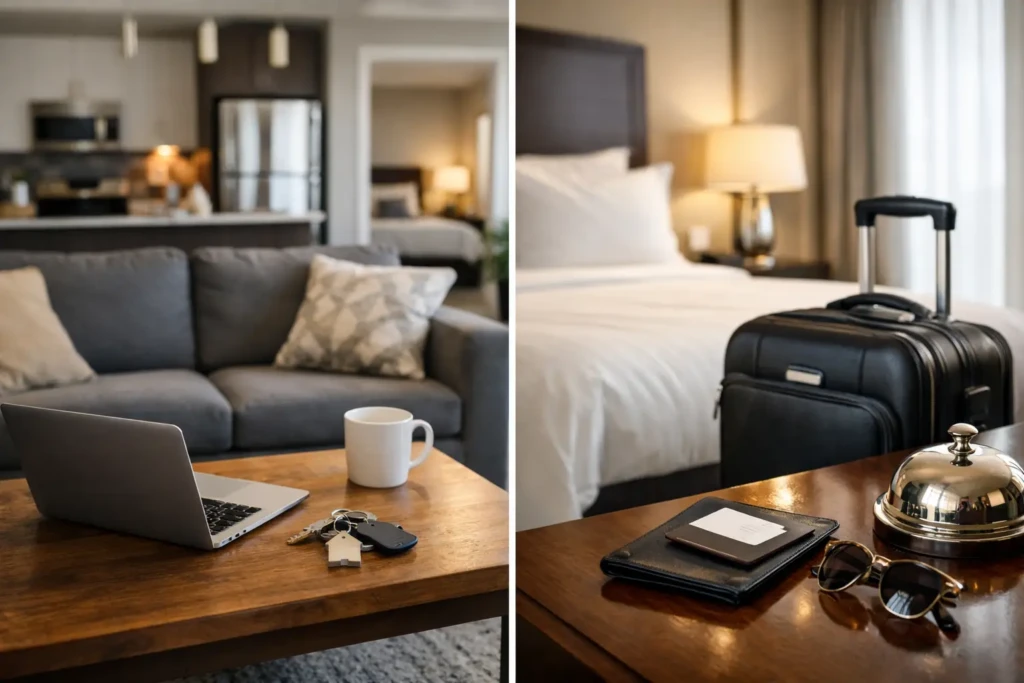
A one-week project can work in a hotel. A six-week assignment, team relocation, or temporary move usually exposes the limits fast. When people compare corporate housing vs hotel stay, the real question is not just where you sleep – it is how well the space supports work, rest, privacy, and daily life.
For business travelers, travel nurses, relocating professionals, and families between homes, the better choice often comes down to length of stay and the kind of routine you need to maintain. Hotels are built for convenience. Corporate housing is built for living. That difference matters more than most people expect.
Corporate housing vs hotel stay: the core difference
A hotel gives you a standardized short-term setup. You check in, use the room, and rely on shared amenities such as housekeeping, a lobby, a gym, or on-site dining. It is efficient, especially for brief trips when most of your time is spent outside the room.
Corporate housing is different by design. It offers a fully furnished home or apartment meant for extended or transitional living. Instead of one room and a mini fridge, you typically get separate bedrooms, multiple bathrooms, a full kitchen, living space, laundry, and work-friendly features that make longer stays easier to manage.
That distinction is why the comparison is rarely about which option is universally better. It is about which option matches the demands of your stay.
When a hotel stay makes sense
Hotels still serve an important role, and for some travelers they are the right answer. If you are flying in for a few nights of meetings, attending a conference, or making a quick site visit, a hotel keeps things simple. You do not need to think about groceries, cooking, or settling in. Daily housekeeping and front-desk access can also feel convenient when your schedule is packed.
There is also comfort in predictability. Major hotel brands offer a familiar process, clear service standards, and a straightforward booking path for short visits. If your company policy is built around one- to three-night stays, a hotel often fits neatly into that structure.
The trade-off is that hotel convenience can become restrictive once the stay stretches beyond a few days. The room that felt efficient on Monday can feel cramped by the second weekend.
Where corporate housing pulls ahead
Extended stays change the equation. Once you are staying for multiple weeks or months, space stops being a luxury and starts becoming a practical need. Corporate housing gives you room to work without sitting on the edge of a bed, room to eat without relying on takeout for every meal, and room to relax without feeling confined.
That matters for productivity. A dedicated workspace, reliable high-speed Wi-Fi, and a quieter residential layout support a better workday than trying to take calls from a hotel desk squeezed between a television and a coffee maker. For travel nurses working long shifts, or professionals balancing remote work with in-person commitments, the ability to come home to a real living environment makes a noticeable difference.
It also matters for recovery. After a demanding day, people do better in spaces that allow them to reset. A living room, a private bedroom, and a kitchen create a more natural rhythm than a single-room setup ever can.
Cost is not as simple as the nightly rate
Hotels often look cheaper at first glance because the nightly number is easy to compare. But the true cost of a longer stay is usually broader than the room rate alone.
With a hotel, you may end up paying more over time through restaurant meals, parking, laundry service, pet fees, and premium internet charges. Even when breakfast is included, lunch and dinner costs add up quickly if you have no real kitchen. For teams or families, booking multiple hotel rooms can push the total even higher.
Corporate housing typically offers stronger value on extended stays because it includes the essentials that reduce everyday spending. A full kitchen lowers meal costs. In-unit laundry saves time and money. Shared common areas mean one property can often replace the need for several separate hotel rooms.
This is especially relevant for employers managing housing budgets for project staff, healthcare placements, or relocation periods. The monthly math often favors a furnished home, particularly when the stay lasts more than a couple of weeks.
Privacy, space, and daily comfort
This is where the difference becomes obvious. Hotels are built around temporary occupancy. Corporate housing is built around temporary living.
If you are traveling alone for a short time, a hotel room may be enough. But if you are staying for a month, traveling with a spouse, coordinating housing for a small team, or bringing children during a relocation, the need for privacy increases quickly. Separate bedrooms and bathrooms help people keep different schedules without constant interruption. A proper living area allows everyone to share space without feeling crowded.
There is also a psychological advantage to having a home-like environment. Being able to cook a familiar meal, spread out your work materials, or watch a movie in a comfortable common area can make a temporary stay feel stable instead of disruptive. That stability matters when you are trying to stay focused on work or help a family adjust during a move.
Service expectations: hotel support vs managed housing support
Some travelers assume choosing corporate housing means giving up service. That can be true with informal vacation rentals, but it is not true with professionally managed corporate housing.
A well-operated corporate housing provider combines the comfort of residential space with the reliability travelers expect from hospitality. That includes clean, ready-to-live-in homes, responsive communication, clear arrival instructions, and ongoing support during the stay. In many cases, that level of attention feels more personal than a busy hotel front desk.
For guests who want more than keys and a Wi-Fi password, this is where premium operators stand apart. Florida HomeShares, for example, focuses on turnkey furnished housing in Davenport and Kissimmee with concierge-style support, dedicated work-friendly features, and flexible stay options for professionals, teams, and families in transition. That approach closes the gap between hotel service and residential comfort.
Corporate housing vs hotel stay for different travel needs
For solo business trips under a week, hotels usually remain the easiest fit. They are simple, fast, and familiar. If your main priority is proximity to meetings and you will spend very little time in the room, that convenience can outweigh the limits.
For travel nurses, contractors, project managers, and relocating professionals, corporate housing usually becomes the stronger option. These travelers need more than a place to sleep. They need a place to live well enough to perform at work, maintain routines, and avoid burnout.
For corporate teams, the answer depends on group size and stay length. Hotels may work for a short event. But for multi-week assignments, housing a team in a furnished home with multiple bedrooms, shared gathering space, and a kitchen often creates better comfort and better value.
For families in transition, hotels are rarely ideal beyond the very short term. Children need room. Parents need practical features. Everyone benefits from a quieter setup with laundry, outdoor space, and the ability to settle into a routine.
Questions to ask before you book
Before choosing between corporate housing and a hotel stay, think about how the stay will actually function day to day. How long will you be there? Will you need to cook, do laundry, or work remotely? Are you traveling alone or coordinating for a team or family? Do you need flexibility for changing dates, or support beyond check-in?
Those questions usually point to the right answer faster than comparing nightly prices alone. A hotel solves short-term lodging. Corporate housing solves the larger experience of temporary living.
The better choice depends on the life you need during the stay
If your trip is brief and transactional, a hotel may be perfectly adequate. If your stay includes work, recovery, family life, or any kind of transition, corporate housing tends to offer a better fit because it supports the full rhythm of your day, not just the overnight portion.
The best temporary housing should help you feel prepared, comfortable, and taken care of from the moment you arrive. When a stay starts to look less like a trip and more like real life, that is usually your sign to choose the option built for living.
 EN
EN  ES
ES  PT
PT  ZH
ZH  ZH_HK
ZH_HK  FR
FR 